Patents - How to Apply, Maintain, Protect, and Enforce a Patent
Patents protect technical inventions and can play an important role in the
intellectual property strategy of startups and technology companies. By
granting temporary exclusive rights, patents allow inventors to commercialize
their innovations, attract investment, and prevent competitors from copying
key technologies.
However, patents are also complex strategic tools. Founders must first determine
whether their invention is truly new and patentable, then decide where to seek
protection internationally, and understand how patents can realistically be
enforced in competitive markets.
In this section you'll find practical explanations of patentability, filing
routes across different jurisdictions, and the legal and strategic risks
associated with enforcing patent rights. The guides below help inventors and
founders navigate the most important decisions in building a patent strategy.
Assessing Patentability
Before investing time and money in a patent, founders need to answer a few critical questions.
Does the invention already exist? Has anything similar been published? And is it still possible
to file after disclosure? The pages below are the most important starting points for anyone exploring whether an invention can be patented.
Understand the steps, costs, and strategic choices involved in securing a patent — and when its the right tool to protect your innovation.
Why should you apply for a patent? How does the process work, and when are you eligible to file? More importantly, are
there situations where seeking a patent might not be the best choice?
Imagine this: you've come up with a groundbreaking idea or even turned it into a tangible invention. Now, you're
considering how to monetize your innovation—whether by launching your own business or licensing your idea to others.
Before moving forward, it's crucial to understand that the primary motivation behind obtaining a patent is financial
gain. Here's why:...
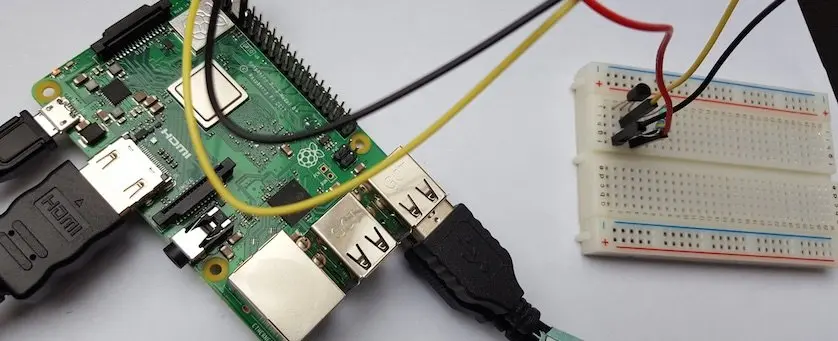
Can you patent a pure idea without a working prototype? Learn what patent offices actually require and how to turn a concept into a legally defensible invention.
Can you patent a pure idea without a working prototype? While the answer is technically yes, a patent application must provide
enough detail to show how the invention works. Patents are not granted for vague concepts — they require a clearly described,
technically feasible innovation.
If you're considering applying for a patent, it's important to develop your idea into a complete and well-documented invention.
A strong patent application typically includes technical details, potential applications, and clear claims that define the
invention's uniqueness. In practice, preparing a patent application for an early-stage idea becomes a careful balancing act:
enough detail must be disclosed to meet legal requirements, while still protecting the core concept from competitors.
Learn how to check whether your invention is truly new before investing time and money in development or patent protection.
Before investing time and capital into development or filing a patent application, it is essential to determine whether your invention is genuinely new.
Many ideas appear innovative at first glance, yet similar solutions may already have been disclosed in patent documents, scientific publications, or commercial products.
A structured prior art search helps reduce strategic and financial risk by clarifying whether novelty is likely to be present. Understanding what already exists allows inventors and startups to refine their concept, adjust their strategy, or avoid investing resources in ideas that cannot be protected.
This page explains how to assess novelty systematically, which sources to consult, and how to interpret the results of a prior art search when deciding whether to move forward with a patent application.
Understanding prior art is essential for determining whether an invention is truly new and therefore eligible for patent protection.
In intellectual property law, patents protect inventions that are new, useful, and non-obvious.
Determining whether something is truly new depends on prior art: earlier publications, patent
applications, scientific papers, or existing technologies that already describe the same idea.
Prior art effectively defines the boundary between a patentable invention and knowledge that
is already publicly available. If an invention has been disclosed anywhere in the world before
a patent application is filed, it may no longer qualify as novel.
Understanding how prior art works is therefore crucial when evaluating whether an idea can be
protected by a patent and when preparing a strong patent application.
Patent Routes and Geography
Patents are territorial rights, which means protection must be obtained in each
jurisdiction where an invention will be commercialized. Founders therefore need
to decide where to file, whether to use international filing routes such as the
PCT, and how to balance cost, market size, and enforcement realities. The
articles below explain the main patent filing strategies across different
regions.
Learn how the Unitary Patent System simplifies patent protection across multiple European countries with a single granted patent.
The Unitary Patent System, which became effective on June 1, 2023, introduced a new way to obtain patent protection across multiple European countries with a single granted patent.
Instead of validating a European patent separately in each country, the Unitary Patent provides protection across all EU member states participating in the system.
At launch, this covered 17 countries and is expected to expand as more states join.
This approach simplifies post-grant administration and can significantly reduce translation and validation costs compared to the traditional European patent route.
However, it also introduces strategic considerations for inventors and startups, particularly regarding enforcement through the Unified Patent Court and the geographic scope of protection.
Understand how the Patent Cooperation Treaty (PCT) allows inventors to seek patent protection internationally through a single initial application.
The
Patent Cooperation Treaty (PCT)
, signed by more than 150 countries, provides a mechanism for inventors to seek patent protection internationally through a single patent application.
Instead of filing separate national applications in each country from the start, the PCT route allows you to begin with one international application that
temporarily covers all participating countries.
This system simplifies the early stages of international patent protection and gives inventors additional time to evaluate the commercial potential of their
invention before committing to costly national filings. During the international phase, a search and preliminary examination help determine whether the invention
is likely to meet the requirements of novelty, inventive step, and industrial applicability.
If the application proceeds successfully, the inventor must eventually enter the national phase and choose in which countries patent protection should be pursued.
Read the full explanation of how international patent protection works through the
PCT route for worldwide patent applications
.
Enforcement and Risk
Owning a patent does not automatically stop competitors from using an invention.
Patent rights must be enforced, and doing so involves legal strategy, cost, and
risk. Founders should understand infringement, defensive strategies, and the
realistic limits of patent protection before relying on patents as a business
asset. The following articles explore how patent enforcement works in practice.
Understand what enforcing a patent really involves, how infringement risks arise,
and why these issues should be considered long before a conflict reaches court.
Holding a patent does not automatically protect you from conflict. Enforcing your rights
is often a strategic decision involving cost, uncertainty, and business risk.
At the same time, inventors must be careful not to infringe on existing patents themselves —
sometimes without even realizing it.
This page explores how patent enforcement works in practice, common infringement risks,
and why these considerations matter early in the innovation process — not just when disputes arise.
Learn what intellectual property litigation involves, when disputes escalate into legal action,
and how courts resolve conflicts over patents and other IP rights.
Intellectual property litigation refers to formal legal proceedings that arise when parties
cannot resolve disputes over patents, trademarks, copyrights, or designs through negotiation.
It typically involves courts, legal pleadings, evidence, and potentially far-reaching consequences
for businesses and inventors alike.
Understanding when a conflict turns into litigation — and what that process looks like —
helps inventors assess risks, costs, and strategic options before taking formal legal steps.
Learn what patent infringement means, when it occurs, and how patent holders can enforce their intellectual property rights.
A patent gives the inventor a legal right to prevent others from making, using, storing, or selling a protected
invention without permission. When another party performs one of these acts without authorization from the patent
holder, this is known as
patent infringement.
Patent infringement represents a violation of Intellectual Property Rights (IPR). If infringement occurs, the
patent holder may take legal action to stop the unauthorized activity and potentially claim damages. Enforcement
can involve negotiations, licensing discussions, or legal proceedings before national courts or specialized
patent courts.
Understanding how infringement is determined is important for both inventors and companies developing new
technology. Read the full explanation of how patent infringement works and how patent holders can enforce their
rights.
Learn why having your own patent does not automatically give you the freedom to commercialize your invention and how to reduce infringement risks.
Many inventors assume that obtaining a patent automatically gives them the right to manufacture and
sell their product. In reality, a granted patent protects your invention, but it does not
automatically provide the Freedom to Operate. Your product may still infringe patents
owned by other parties.
Understanding the difference between patentability and Freedom to Operate
(FTO) is essential for every inventor and startup. Identifying potential blocking patents early
allows you to redesign your product, obtain a licence, or choose another commercial strategy before
investing heavily in development.
Discover why the Patent Office does not examine infringement risks, how companies reduce these risks,
and what practical steps you can take before bringing your innovation to market.
Understand why a granted patent can still be challenged, what can make a patent invalid,
and why patent grant does not guarantee permanent validity.
Many inventors assume that once a patent has been granted, its validity is settled. In reality,
a granted patent can still be challenged if new prior art is discovered or if someone argues that
the patent does not meet one or more of the legal requirements for patent protection.
Understanding why patents can be challenged is important when assessing the strength and commercial
value of your intellectual property. A granted patent gives you an important legal right, but it is
not an absolute guarantee that the patent will remain valid if someone decides to challenge it.
Learn why patent validity can be questioned after grant, what grounds can lead to a validity challenge,
and how you can reduce the risk of discovering weaknesses in your patent only after it becomes
commercially important.
Technoventure
Sell, Build or Scale Your Invention
Understanding patent law is one thing. Seeing how it plays out in real innovation projects is another. The case
studies below show how inventors, startups and multinational companies have dealt with patentability, prior art,
infringement and commercial strategy. Together they illustrate why the concepts explained in the articles on this
page matter in practice. Every patent principle becomes easier to understand when you see how it affected a real
inventor or company.
Patent Case Studies
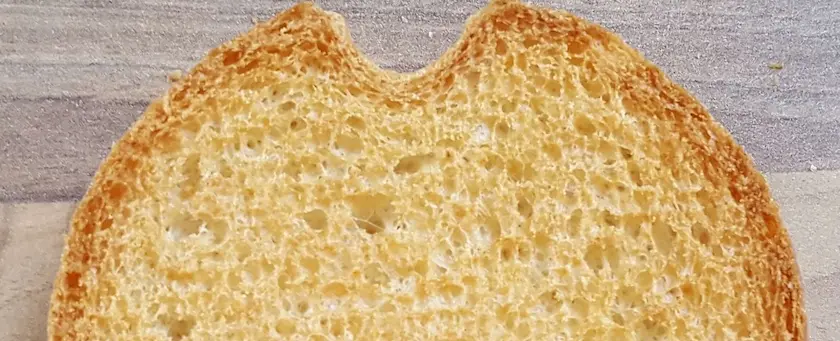
One of the biggest misconceptions among inventors is that a patent is impossible to defend against large
corporations. Theo Tempels showed that this is not always true. Despite repeated legal challenges by major
companies, the courts consistently upheld his patent on the famous notch in a rusk. This case demonstrates that a
well-founded patent can give even an independent inventor a strong legal position. Read the full story about
the patent on the notch in a rusk.
Patent Case: The Notch in a Rusk
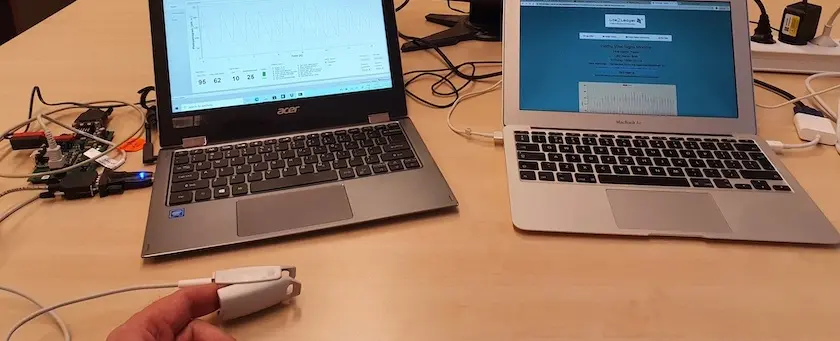
Experienced innovators pay close attention to where major companies fight their patent battles. Apple's dispute with
medical technology company Masimo was about much more than a smartwatch feature. It signals a long-term shift from
consumer wearables toward clinically relevant health technologies. The lesson is simple: when companies invest
enormous resources in protecting an innovation, they are often securing a position in the markets of tomorrow. Read
more about
the patent battle between Apple and Masimo.
The Battle Between Apple and Masimo over Blood Oxygen Measurement
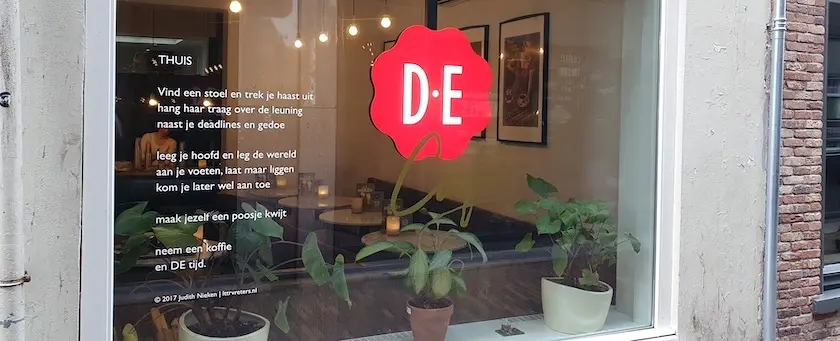
A famous brand and a successful product do not guarantee a valid patent. The European Patent Office revoked the
patent on the Senseo coffee pad because the invention failed to meet the legal requirements of novelty and inventive
step. The case reminds inventors that careful prior art research and a realistic assessment of patentability are
essential before filing a patent application. Read the story behind
the failed Senseo coffee pad patent.
The Failed Patent Behind the Senseo Coffee Pads
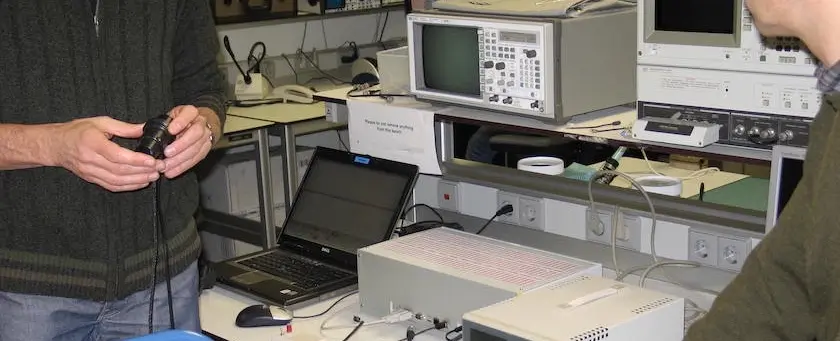
What happens when existing research is already part of the public domain, but a new application is still patentable?
In this real startup case, a university used early discussions to secure a patent on the application of its own technology —
fundamentally shaping the future of the venture.
Read how timing, prior art, and patent strategy came together in
this university patent case study
and what first-time founders can learn from it.
When a University Patents Your Idea First
About Siert Bruins
Hello! I'm Siert Bruins, a Dutch entrepreneur and founder of
Life2Ledger B.V.. Trained as a Medical Biologist, I hold a PhD in Clinical Diagnostics from the
University of Groningen and have over two decades of hands-on experience in innovation at the intersection of universities,
hospitals and technology-driven companies.
Throughout my career, I have (co)-founded several life science startups and helped researchers, inventors, and
early-stage founders transform their ideas into prototypes, patents, partnerships, and funded projects. My work spans
medical device development, clinical validation, startup strategy, and technology transfer. I've guided innovations from
the initial sketch to licensing agreements and investment negotiations.
Since 2009, I've run the Dutch version of this site. I launched
TechnoVenture.eu to provide founders worldwide with
practical, experience-based guidance on inventions, patents, valuation and raising startup capital.
Today, in Life2Ledger, I also focus on blockchain-based data validation for AI in healthcare
— Specifically: how can you be sure that your AI is trained and validated on the correct data, and that this data
truly comes from the patient and the device you think it does?
The content on this site is based on my own experience with real startups — real negotiations, real decisions, and
real outcomes. Yes, I use tools to support the writing process, but the insights, structure, and conclusions are my own.
This is not generic content, but a reflection of what actually happens behind the scenes.
Want to connect? Visit my
LinkedIn
or follow me on
X.
Have questions about your startup strategy or patents? Reach out and I'll share practical insights from real-world experience.
TechnoVenture.eu was founded in 2012 and is fully written and curated by me, Siert Bruins, PhD.
Every article is based on my own professional experience. I publish at a natural pace — aiming for around one
high-quality page per week — providing guidance on patents, startup capital, valuation, and commercialization. Depth
and accuracy matter more than mass production.
My goal is to offer reliable, experience-based info for inventors and first-time founders. I hope to help people
turn new ideas into real-world value — whether through selling an idea, building it just far enough to sell, or
launching a startup. For most independent inventors, I believe the smartest path is often to build just enough — then sell.