Non-Disclosure Agreement | NDA: What Should Be Included?
Checklist and tips, plus a free downloadable template.

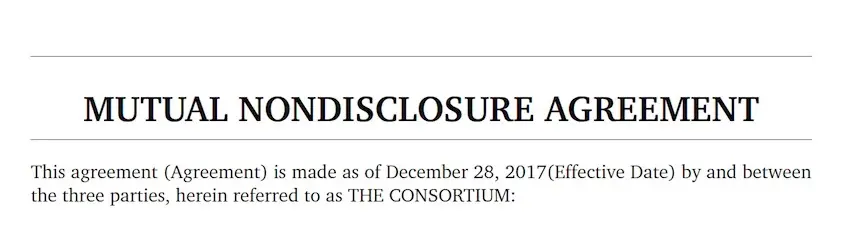
A Non-Disclosure Agreement (NDA), also known as a Confidentiality Agreement (CDA), is a legal contract that allows two or more parties to exchange confidential information while reducing the risk of unauthorized disclosure. This page is a practical guide for inventors, researchers and early-stage startups who want to protect valuable know-how before discussing an innovation with potential partners, manufacturers, universities or investors.
Unlike our introductory guide on what a Non-Disclosure Agreement is, this page focuses on the practical side of using NDAs. You'll find an extensive checklist of the clauses commonly included in confidentiality agreements, practical drafting tips, and a free editable Word template that you can adapt to your own situation.
This page is part of our Trade Secrets & NDAs knowledge hub, where you'll also find practical examples, related agreements and additional resources on protecting confidential information during innovation and technology development.
Practical NDA Guide for Inventors and Startups
There is no universal NDA. Every confidentiality agreement should be tailored to the situation, the parties involved and the information being shared. Large companies often use their own standard agreements, while startups typically need a more flexible approach. Understanding the purpose of each clause will help you evaluate an NDA before signing it—or draft one that provides appropriate protection for your own project.
While NDAs help protect confidential information during discussions with potential partners, they are often used by inventors who are trying to sell an idea before building a company. Learn more about the advantages and limitations of the Selling an Idea strategy.
Confidentiality also plays an important role in protecting future patent rights. Public disclosure of an invention before filing a patent application may destroy its novelty and make patent protection impossible. If your innovation could eventually be patented, it's important to understand how NDAs and patent strategy work together. You can read more in our guide on how to get a patent.
Below you'll find a practical NDA checklist covering the most important provisions found in confidentiality agreements, followed by a free editable NDA template that you can customize for your own project.
Checklist: Main Points of Attention in an NDA
- Parties Involved: every agreement starts with the “undersigned,” which lists the parties involved, including their full names, addresses, and representatives who are authorized to sign. Make sure that the representative is indeed authorized to sign. This often goes wrong in research institutions where the researcher signs the NDA without proper authorization. The legal form of the company and its registration number with the Chamber of Commerce may also be included.
- Mutuality of the Confidentiality Agreement: sometimes the agreement is one-sided, naming only one party. This would mean that only one party's information is considered confidential, which is usually unreasonable. You should not accept such a situation. Therefore, make sure that the NDA is always set up as a two-way agreement so that all parties can both provide and receive confidential information.
- The Purpose of the NDA: usually, under the heading “whereas,” the purpose of the agreement is outlined. The reason for signing the NDA is that confidential information will be exchanged. It's important to describe the purpose as specifically as possible. Simply stating that the parties will exchange confidential information is insufficient. If the purpose is too vague, a company might claim that after talking to you, they can't work with anyone else. For example, if you have technology for voice recognition and are approached by a company that wants to integrate your technology into their platform, the NDA should specify your technology and the company's platform. Make sure the NDA does not obligate you to enter into any further agreements, like a partnership or purchase agreement. That's not the purpose of an NDA. If you decide to collaborate, a separate agreement should be made.
- Ownership of Confidential Information: ensure that it is stated that all shared information remains the property of the disclosing party. A license might be granted to the receiving party for the purposes outlined in the NDA. Be cautious with software; specify what can be done with it. If your technology is protected by a patent or you are applying for one, mention it, along with the title and number.
- Scope of Confidentiality: usually, in a separate article filled with formal language, it is extensively described that the parties will make every effort to keep the information provided under the agreement truly confidential. In addition, a confidentiality agreement should also specify with whom the information may be shared. Often, the information needs to be discussed internally with colleagues to determine if they can use it. Sometimes these colleagues are named along with their positions, but it may also be stated that confidentiality is imposed on all employees of the respective company and any third parties consulted. It is not necessary for the employees of the receiving company to personally sign the confidentiality agreement. The company is responsible for ensuring that confidentiality is properly safeguarded through internal procedures. Since the information will be shared internally, it is wise to include in the agreement that written confidential information is identifiable as such because it is marked as confidential. This is particularly important for emails. An email is sent so quickly and is often not recognized as confidential.
- Verbal information is a separate issue. Sometimes confidential information is exchanged verbally, and the person sharing it only realizes afterward. Include a clause stating that verbal information must be confirmed in writing within a specific time, such as seven days.
- Authorities: usually, the confidentiality agreement includes a provision that in the event of a legal procedure (investigation by the judiciary or a competent regulatory authority), the confidential information may be handed over to the authorities. In this exceptional situation, the information remains confidential and should not be included in the list of reasons why and when the disclosed information is no longer confidential. It should be stated that the provider of the information must be informed in such a case. Alternatively, the party required to disclose the information should make efforts to limit or delay the disclosure as much as possible. This allows you to decide how to proceed to prevent your confidential information from being, for example, discussed in a courtroom with a public audience (for instance, by starting an injunction to prevent the disclosure of the confidential information).
- When Confidential Information is No Longer Confidential. Developments move quickly, and it may happen that the fantastic idea is now simply available for purchase or that it can be found somewhere on the internet. It is not reasonable to demand that information which enters the public domain should still be kept confidential, and that's why this point is usually explicitly included as an exclusion clause. However, it can be useful to note that this does not apply when it's only a part of the confidential information. And combinations of pieces of information that are individually available in the public domain can form a new application that no one else has thought of yet. By establishing when confidentiality no longer needs to apply, you can avoid much debate.
- Duration and Termination of the NDA: There must always be an article that specifies how long the agreement is valid. It also states under what circumstances it is no longer valid (for example, in the case of bankruptcy or if the parties mutually agree that the agreement is no longer valid).
- Disputes and Choice of Law: It is always indicated under the law of which country the agreement falls, and sometimes also in which place a dispute will be brought before the court. You can imagine that if you enter into a confidentiality agreement with, for example, a French party, you would prefer not to stand before a French court with this party. And that your French opponent would not want to stand before a Dutch court with you. If you can't agree on this, you might choose a more neutral court, for instance in Switzerland. Finally, sometimes it is also stated how high the penalty will be per breach of the agreement. There are parties who include this, but it also happens that they say: "We'll leave that up to the judge." A more exotic clause is that it is sometimes explicitly stated that the agreement falls under, for example, Dutch law but with the exclusion of the so-called Vienna Convention. In English, this is the UN Convention for the International Sale of Goods, or CISG. This international treaty from 1980, to which many countries are parties, deals with the delivery of goods in international trade and applies by default unless it is explicitly excluded. However, it doesn't really need to be included in a confidentiality agreement and fits more within a company's general terms and conditions.
- After Signing the NDA: It has happened to me also: you've signed, started a great project, and the collaboration is going so well that there's already talk of a new project. In the meantime, a few years have passed, and no one is thinking about the validity period of the confidentiality agreement. So, remember to extend it in time if necessary. Large companies sign thousands of agreements, and the legal department should keep track of when they expire. You can imagine that in smaller companies and startups, with frequent changes in management, this can easily go wrong.
These were my main points. When you ensure that the above items are included in the confidentiality agreement to be signed, you've covered the most important matters. Confidentiality agreements are important legal documents, so make sure to store them well.
A fascinating example of extreme confidentiality is the story of Dutch inventor Jan Sloot, whose remarkable invention is described in detail on the Jan Sloot example page. Sloot never signed an NDA with anyone. Instead, he simply refused to reveal how his technology worked. Even during business trips to Silicon Valley, accompanied by a group of investors and adventurers trying to help him commercialize his idea, he let no one touch the device or even stand too close. During demonstrations, Sloot operated the machine himself, visibly tense and sweating, determined to keep its inner workings secret. His approach shows that absolute secrecy can be a form of confidentiality, but it also comes with enormous risks: when Sloot suddenly died of a heart attack just after signing his first deal, the device was never found and no one ever learned how the invention worked. His story highlights both the power and the risk of relying solely on personal secrecy instead of using NDAs to safeguard critical information when working with partners, investors or potential buyers.
Free downloadable template of an NDA
This was it. After this rather long list, below is a free downloadable Word document as a template for your convenience. You are free to adapt and use the document as you prefer. You have to specify the [bold issues between square brackets] and send de document to your counterpart.
Free Downloadable template of an NDA
Good luck with your NDAs! They are a vital tool for inventors and innovative entrepreneurs.