What is a Material Transfer Agreement (MTA)?
When do you need an MTA and is an MTA mandatory? Are there examples of an MTA?

The abbreviation MTA stands for Material Transfer Agreement. It is a legal contract used in the transfer of research material between two parties, such as universities or research institutions. When sharing biological materials or data between organizations, an MTA ensures that both parties understand how the materials may be used and protected. It defines ownership, usage rights, and confidentiality obligations. There is also a similar document for the transfer of data (the DTA) or a combination of both (the MDTA). In many cases, the transferred materials fall under intellectual property rights, such as patents and copyrights. An MTA outlines the conditions under which the transfer takes place, including the rights and obligations of the parties involved, and it governs any restrictions on the use or distribution of the materials.
The use of an MTA can be important for several reasons. First, it helps protect the intellectual property rights of the parties involved by clarifying the ownership and permitted use of the materials. Second, it can help prevent the unintentional or unauthorized use of the materials. Third, it helps ensure that the materials are used in a responsible and ethical manner.
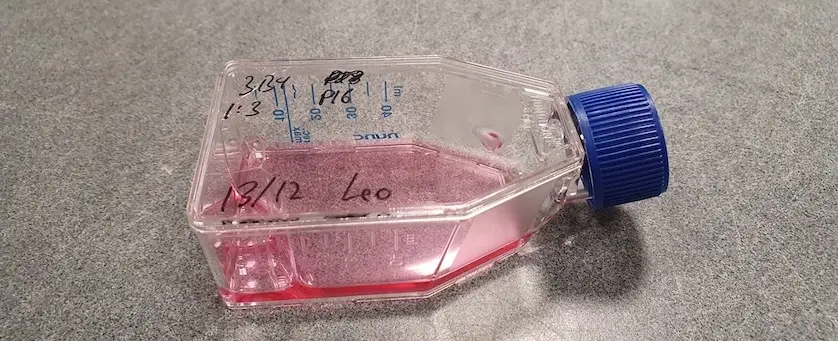
MTAs are widely used in the Life Sciences. Biological or body-derived materials transferred using an MTA include cell lines (see our image at the top), self-developed culture media, reagents, antibodies, biopsies, an animal model, a database with DNA sequences, or an AI algorithm.
Material Transfer Agreements are closely connected to intellectual property. They help organizations share valuable research materials while preserving ownership rights, defining permitted uses and protecting future commercial opportunities. These agreements provide a way to protect the intellectual property rights of the owners of an invention while also promoting the sharing of data and material by researchers. After all, we all want science to advance, but we also want to protect our inventions.
In principle, this is a good thing. However, some researchers have a negative view of MTAs because they can be overly complex and may hinder research. Nonetheless, MTAs are important for defining the rights, responsibilities, and obligations of the parties involved in collaborative research and must be carefully drafted, especially regarding intellectual property ownership of the transferred materials.
What Can Go Wrong Without an MTA?
For you as a researcher, an MTA may initially feel like unnecessary bureaucracy. After all, the goal is simple: obtain a research material, perform experiments and publish the results. However, the purpose of an MTA is not to slow down research. It is to make sure that all parties understand what happens when valuable materials are shared.
Imagine a researcher receiving a unique antibody, cell line or biological sample from another laboratory. The experiments are successful and generate important results. But who owns the material? Can it be shared with other researchers? Can it be used for commercial development? Who has rights to discoveries that result from its use?
These questions may seem irrelevant at the start of a collaboration, especially when everyone has the same scientific goal. However, they can become important years later when research results lead to publications, patents, licensing opportunities or maybe real commercial applications.
Researchers often experience a practical dilemma when receiving materials from another laboratory or organization. In many cases, the material is provided simply to perform an experiment: try it, test a hypothesis, and see whether it works. The amount of material may be limited and the main goal is scientific discovery rather than commercial development.
From this perspective, signing a detailed legal agreement before the first experiment can feel unnecessary or disproportionate. A researcher may think: "If the experiment succeeds and leads to something valuable, we can always discuss ownership, publications or possible patent rights afterwards."
However, this is exactly the point where misunderstandings can arise. A successful experiment can create value that was not foreseeable when the material was transferred. The results may lead to a new invention, a patent application, a commercial opportunity or further collaboration. An MTA does not prevent these possibilities; it simply creates clarity about the conditions under which the material is shared and how future developments will be handled.
Although the process of negotiating and signing an MTA may take some time and effort, it is generally considered a necessary step to protect the interests of all parties involved. It is important to carefully review and negotiate the terms of the MTA to ensure that they are acceptable and do not conflict with your research goals. So don't just sign it quickly because your Board of Directors wants you to. If you have concerns about the impact of the MTA on your research timeline, it may be useful to discuss these concerns with the other party and plan ahead to allow for any necessary negotiations or revisions. Taking the time to properly document and protect the transfer of research materials can ensure that your research is conducted responsibly and ethically and can prevent legal or ethical issues in the future.
The MTA clearly outlines the general conditions of the transfer, including any restrictions on the use or distribution of the materials. It may also specify any licensing or ownership arrangements for intellectual property related to the materials. By clarifying the ownership and permitted use of the materials, the MTA helps protect the intellectual property rights of the parties involved.
Additionally, the MTA may include specific provisions regarding the use of the materials in research or commercial applications. For example, it may require that resulting publications or inventions be described in relation to the original source of the materials. The providers of the materials must be explicitly mentioned, which helps ensure that the involved parties receive proper recognition for their contribution to the research.
Overall, the MTA is an important legal contract that helps define and protect the intellectual property rights associated with the transfer of research material. It is crucial for researchers to carefully review and negotiate the terms of the MTA to ensure that their rights and interests are protected.
What is included in an MTA?
Regardless of their length and complexity, most MTAs often include one or more of the following provisions:
- A preamble;
- Definitions;
- A description of the use of the materials;
- What constitutes confidential information and how it should be handled.
- Warranty provisions;
- Applicable intellectual property rights;
- Liability and/or indemnity provisions;
- Publication rights;
- Governing law;
- Termination of the agreement;
- Signatures. If you want to avoid trouble, make sure the MTA is signed by an authorized person, such as a dean or research director. Do not sign it quickly yourself because you are in a hurry with your research.
- Any figures and other attachments.
Some of these clauses are relatively standard in an MTA, while others can vary significantly depending on the specific situation.
Note that when the exchanged materials also involve sensitive methods, proprietary datasets or unpublished results, an MTA is often combined with a Non-Disclosure Agreement (NDA). The NDA protects the confidentiality of the information, while the MTA governs the permitted use of the materials themselves.
For inventions that might later become part of a patent application, remember that early disclosure can affect patentability. Learn more about how to get a patent and protect your rights before sharing materials.
Drafting and signing an MTA is not legally required when exchanging research material, but it is a good practice and can prevent future problems. The importance of drafting an MTA, which outlines the agreements for providing and using materials and/or data when they are provided to other researchers, is also recognized and included in standard 5.7.8 of the Health Research Code of Conduct.
Where to Find MTA Examples in the EU and the USA?
To facilitate the sharing of data and/or materials for health research within the European Union, the University Medical Hospitals have mutually developed MTA, DTA, and MDTA templates. These templates can be found in PDF and Word format on the site of the initiators and are free to download and use.
Similar templates for Material Transfer Agreements (MTAs), Data Transfer Agreements (DTAs), and combined agreements (MDTAs) exist in the United States as well. Many universities, research institutions, and organizations in the U.S. provide widely accepted standard agreements, templates and resources for these agreements to facilitate the transfer of research materials and data. Here are a few examples:
- National Institutes of Health (NIH): The NIH offers a variety of MTA templates and resources through its Office of Technology Transfer. These templates are designed to accommodate different types of transfers and collaborations. The best known is the Uniform Biological Material Transfer Agreement (UBMTA), a model originally supported by NIH and managed through the
- Association of University Technology Managers (AUTM) (AUTM): AUTM provides resources and templates for MTAs and other agreements, which are widely used by research institutions and universities in the U.S. Many academic institutions join the UBMTA via a short implementing letter so they can transfer biological materials under consistent terms without repeated negotiation. Many academic institutions join the UBMTA via a short implementing letter so they can transfer biological materials under consistent terms without repeated negotiation. For smaller, lower-risk exchanges, labs often use a shorter Simple Letter Agreement (SLA), another NIH-endorsed template for routine materials.
- Individual Universities: Many U.S. universities have their own MTA templates and guidelines available on their technology transfer office websites. Examples include Harvard University, Stanford University, and the University of California system.
All instruments in the EU and in the USA aim to speed up collaboration, reduce legal friction, and clarify ownership and permitted use. However, in Europe, for example through the joint university medical centers (UMCs), model MTAs are more regionally coordinated and legally aligned with European frameworks such as the GDPR and national regulations. In the United States, by contrast, standardization is largely voluntary and driven by research networks rather than government mandates — a system that is less centralized but deeply institutionalized within the academic and research community.
You can usually find these templates by visiting the technology transfer or research office websites of major research institutions and universities in the U.S. They are often available for free download and use, similar to the European templates mentioned.
Similar templates and resources for Material Transfer Agreements (MTAs), Data Transfer Agreements (DTAs), and combined agreements (MDTAs) are available in most countries. To find these templates, you can visit the official websites of the respective research councils or university research offices. These resources are typically provided to facilitate the smooth transfer of research materials and data, while protecting intellectual property and ensuring compliance with legal and ethical standards.
Whether you are sharing biological samples, data or research tools, using a clear and well-structured Material Transfer Agreement helps prevent misunderstandings and protects all parties involved. MTAs ensure that ownership, permitted uses and responsibilities are properly defined, which helps avoiding problems when collaborating across institutions or borders. By using standardized templates from trusted research offices, you can streamline collaborations while safeguarding both scientific integrity and intellectual property.