The Bill Gates & IBM Deal: A Startup Lesson in Timing and MVP Thinking
This real-world story shows how Bill Gates closed a major deal with an early, imperfect product — and how this strategic move became the foundation of Microsoft's success.


This is the inspiring story of Bill Gates and IBM — a moment in tech history that perfectly illustrates early-stage product thinking. Gates, widely recognized as a technological pioneer and co-founder of Microsoft, reshaped personal computing with a strategic move centered around what we would now call a Minimum Viable Product (MVP). The operating system he delivered to IBM — MS-DOS — was far from perfect, but it worked, solved a real problem, and could be improved after launch.
This example also ties directly into the principles from our List of Questions to Test Your Business Idea: Gates validated the need, ensured the solution worked, and moved fast enough to seize the opportunity. Rather than waiting for a polished product, he prioritized timing, practicality, and strategic leverage — decisions that ultimately shaped Microsoft's long-term success.
Early Years of Bill Gates
Born on October 28, 1955, in Seattle, Washington, William Henry Gates III displayed an early aptitude for programming. At the young age of 13, he developed his first computer program and later enrolled at Harvard University, where he met Paul Allen, his future business partner. He left Harvard University in 1975 to pursue his passion for computer programming and co-founded Microsoft with Paul Allen. Despite not completing his formal education, Gates went on to become one of the most successful and influential figures in the technology industry.
Founding Microsoft
In 1975, Gates and Allen founded Microsoft, with a vision to put a computer on every desk and in every home. Their first major success came with the development of the BASIC programming language for the Altair 8800, a groundbreaking moment that marked the beginning of Microsoft's ascent.
Windows Revolution
Microsoft's most significant breakthrough came with the introduction of the Windows operating system in 1985. Windows transformed personal computing, providing a user-friendly interface that made computers accessible to a broader audience. The iconic Windows platform became synonymous with PC computing and laid the foundation for Microsoft's dominance in the software industry.
Entrepreneurial Vision
Bill Gates' entrepreneurial vision extended beyond software. Under his leadership, Microsoft diversified into various technology sectors, including productivity software, gaming (Xbox), and enterprise solutions. His strategic decisions and commitment to innovation solidified Microsoft's position as an industry leader.
Philanthropy and Giving Back
In 2000, Bill Gates, along with his then-wife Melinda, established the Bill & Melinda Gates Foundation, one of the world's largest private charitable foundations. The foundation focuses on global health, education, and poverty alleviation, aiming to make a positive impact on the lives of millions around the world.
Legacy
Bill Gates stepped down from his day-to-day role at Microsoft in 2008 but continued to be involved in shaping the future of technology and contributing to social causes. His legacy as a visionary entrepreneur, software architect, and philanthropist remains an enduring inspiration for aspiring innovators and changemakers worldwide.
The Bluff of Bill Gates: about IBM Deal and MS-DOS
In the business world, all stories about the failures of a company are more or less the same because entrepreneurs repeatedly make similar mistakes. Success stories, on the other hand, often have something unique, and they are not only enjoyable to read but also offer learning opportunities. Let's take the story of Bill Gates and Microsoft as an example of a success story about the value of an invention — why not? It remains a beautiful story. To do this, let's go back to the early '80s when the world was on the verge of witnessing the birth of the PC with the operating system MS-DOS.
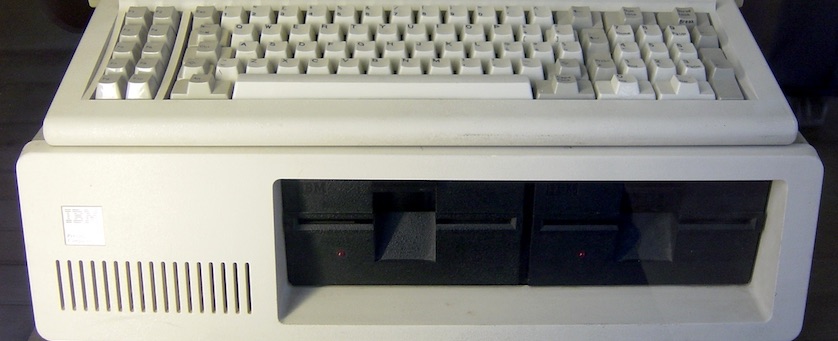
About the beginning of Microsoft and how Bill Gates founded and shaped his business, many stories circulate, but there is a particular anecdote that remains very persistent. The story goes like this. When Bill Gates heard that IBM was looking for an Operating System (OS) for the IBM PC, he stepped in and claimed he could deliver the desired OS. In reality, however, Gates had never written an operating system before. Yet, he was aware that a software developer living just a few streets away had created a 'Quick and Dirty Operating System' (QDOS) for microcomputers. Gates acquired QDOS for $50,000, keeping the original creator unaware of the impending deal with IBM (although other stories tell that Microsoft actually hired the original developer of the OS to make the necessary modfications and he sold the OS for $50.000 to IBM). However, After making (or arranging) essential modifications to the software, Gates returned to IBM and successfully secured a global deal. How it may have happened, the pivotal aspect of the agreement Gates forged with IBM was that the Microsoft he had established, retained the rights to sell the rebranded QDOS, known as MS-DOS, beyond the confines of the IBM-PC project. While the exact details of the negotiations remain unknown, one can envision IBM exerting every effort to acquire complete rights, countered by Gates' determination to preserve those rights. Gates foresaw a future where every American family would own a personal computer. His swift calculation, possibly on the edge of a beer mat, revealed that the potential gains far surpassed any offer IBM could present. Gates skillfully asserted his conditions at IBM, and the rest is history. The crux was that Gates founded Microsoft, retained OS rights, renamed it MS-DOS, and sold it outside the IBM project.
Remarkably, at the young age of his mid twenties, Gates made a groundbreaking move by selling the operating system to the computer giant IBM, a decision that would shape the future of the tech industry.
Lesson for startup entrepreneurs:
For a tech startup, the lesson is clear: when the technology is good enough, it is good enough. Strive for progress, not perfection. Make money as soon as possible to avoid the graveyard of improvement infinity. This is exactly what Bill Gates did and later on this became the idea behind an MVP.
Value creation: the three pillars of a successful invention
Years before the concept of MVP was developed, refined and widely adopted, Bill Gates was aware that to be a successful, meaning you know how to create value with your invention, it must ultimately meet at least three conditions:
- The invention must work.
- There must be a market for it.
- There should be no legal or regulatory obstacles to applying your invention. And, of course, it must be safe.
1. The invention must work
We all have good ideas from time to time, but has your idea been developed, and can you show a Proof of Concept or a working prototype? Can you truly demonstrate that it all works? If not, you'll need to continue developing and testing, and that costs money.
2. Nice to Have versus Need to Have
Okay, it works, but who will buy it, and what are they willing to pay for it? Is it something nice to have for a limited number of people, or is it something everyone rushes to get? This is not known beforehand, and answering such crucial questions falls into the realm of marketing. It's also important to realize that the terms "Nice" and "Need" are highly subjective. For someone, owning a car in Los Angeles may be a "Need to have," while in the center of Amsterdam, owning a car might be a burden. In any case, it's essential to understand that an invention considered a "Need to have" by buyers will likely bring in more for you as an inventor than a "nice to have" invention. Large companies often go to great lengths to turn a "Nice to have" into a "Need to have" through significant marketing campaigns.
3. Safety, legislation, and legal aspects
This can not only be a serious problem but an absolute showstopper, which often occurs in the pharmaceutical industry, for example. Inventors must not only demonstrate that the invented therapy works but also that there are no serious side effects. If authorities deem your invention unsafe for the general public, its value will decrease significantly. However, it doesn't have to be entirely worthless, as some parts of the invention may be applicable to other products or technologies. Remember the saying, "Someone's Trash is Someone else's Treasure." Giving it away is always an option...
The value of Bill Gates' invention (or rather, the product): the assessment
Regarding a startup with an invention, we stated that an invention seeking significant success must meet three conditions. These were (1) the invention must work, (2) it must be a "Need to have," and (3) there must be no legal obstacles or safety issues for large-scale sales. Now, if we assess Bill Gate's OS against the three pillars of an invention, we can easily say that the reason Bill Gates — then an insignificant dropout — could enforce a licensing agreement from the world's largest computer producer was that the OS (the invention) worked; the OS was not a Nice to have for IBM but an absolute Need to have; there was no risk of authorities disapproving the invention; Voila! Microsoft was in business.
Of course, there are still some comments to be made. The OS worked, but its quality was and is still debated because many considered and consider DOS as a completely inferior system. But it worked, and it worked well enough to convince IBM. Bill managed to present a Proof of Concept that met expectations, and that's what matters. The lesson we can draw from this is that things can always be better, but the question is what is sufficient at the moment to progress with an idea or invention. Additionally, it was crucial that IBM was specifically looking for a working OS (the Need to have). To some extent, it is also sheer luck that at that moment and in that place, Bill Gates could fulfill that need. On the other hand, he didn't think that IBM would be too big to talk to him or that he would first perfect the OS and retreat to his attic to program it for years. If he had done that, we probably would never have heard of Bill Gates. That programming would come later... as well as the battles with the authorities. But back in the early '80s, they were not yet concerned with PCs and monopoly positions in operating systems.
Despite ongoing debates about the technical quality of MS-DOS, the software met IBM's requirements—proving that being “good enough” at the right moment can be far more powerful than striving for perfection. Gates understood that speed, timing, and strategic positioning were key. By closing a deal that gave IBM what it needed while retaining the right to sell the product elsewhere, Microsoft laid the foundation for explosive growth.
This moment in tech history is one of the clearest real-world examples of how powerful an MVP-first approach can be. Gates didn't try to perfect the operating system before approaching IBM—he moved fast, validated the opportunity, and improved the product only after securing a major customer. This mindset fits perfectly with the principles from our List of Questions to Test Your Business Idea: identify a real need, deliver a functional solution, and iterate once the opportunity is confirmed. Instead of disappearing into years of coding, Gates shipped early—an approach that ultimately enabled Microsoft’s explosive growth.
IBM and a "Need to Have"
Conclusively, IBM was looking for a working operating system — a true “Need to Have.” Gates happened to be in the right place at the right time, but he also recognized the opportunity and acted decisively. His ability to deliver a functional MVP and negotiate from a position of insight rather than perfection was what shaped the outcome. In the world of startups, timing, problem-solving, and strategic leverage often matter more than building the perfect product.