Intellectual Property: Protect and Leverage Your Innovations
In a world where innovation drives success, Intellectual Property (IP) is essential for protecting your ideas,
technologies, and creations. Whether you're a tech entrepreneur launching a startup, an investor looking to secure
valuable assets, or an inventor with a groundbreaking idea, having a solid IP strategy can mean the difference
between market leadership and losing control of your invention.
This page covers many things you need to know about patents, copyrights, trademarks, and trade secrets. Learn how to
protect, monetize, and strategically manage IP to gain a competitive edge and avoid legal pitfalls.
How do you apply for a patent?
What's the difference between copyright and trademark protection?
Smart IP strategies for startups, investors, and inventors
Whether you're an inventor with a world-changing innovation looking to launch a tech startup or someone seeking to sell
their invention to the right buyer, a strong IP strategy is key to unlocking its full potential.
Below, you'll find articles that provide insights and guidance to help you navigate the world of intellectual property.
Key topics of Intellectual Property
Intellectual property consists of several different legal tools that protect
innovation, creative work, brands, and confidential knowledge. Each form of
protection serves a different purpose and applies to different types of
assets. The guides below explain the main areas of intellectual property and
how inventors, founders, and companies use them to protect and commercialize
their ideas.
Patents
protect technical inventions and give inventors exclusive rights to commercialize new technologies.
Copyright - protects original creative works such as text, software, music, and images.
Trademarks - protect brand names, logos, and product identities used in commerce.
Design Rights - protect the visual appearance of products such as shape and styling.
Contracts & Safeguards
- legal tools such as NDAs, MTAs and confidentiality agreements that help innovators protect ideas, know-how and trade secrets before formal IP protection is secured.
Start Here
If you're new to patents and intellectual property, these pages provide a practical starting point. Learn how to
protect confidential information, determine whether your invention is novel, and understand the key steps involved
in obtaining patent protection.
Get comprehensive information and learn more about the advantages and disadvantages of applying for and maintaining a patent
Applying for a patent can be a powerful way to protect your invention, but is it always the right choice?
Understanding the patent process, eligibility requirements, and potential drawbacks is crucial before making a
decision.
If you've developed an innovative product or technology, you're likely thinking about how to bring it to
market—whether by launching a startup, licensing your idea, or attracting investors. While patents can provide
exclusive rights and competitive advantages, they also require time, effort, and financial investment. In some
cases, alternative intellectual property strategies may be more effective.
Want to know if a patent is the right path for your innovation? Learn more about how to apply, when it makes sense,
and what to consider before filing.
Many innovators want to patent an idea—but patent law requires more than a concept alone
One of the most common questions among inventors is whether an idea can be patented. The answer is both yes and
no. While people often speak about "patenting an idea", patent offices do not grant patents for abstract
concepts or vague business ideas. To qualify for protection, an idea must be developed into an invention that
can be clearly described and understood by others.
This distinction is important because many innovators start thinking about patents long before they have fully
worked out how their solution functions in practice. Understanding what transforms an idea into a patentable
invention can save time, reduce costs, and help you focus on the information that patent examiners actually
require.
On this page, we explain what patent professionals mean when they talk about patenting an idea, how much detail
is needed before filing a patent application, and what practical steps inventors can take to move from concept
to protected invention.
Want to apply for a patent? Learn how to check whether your invention is truly new before investing time and money in development or patent protection.
Ideas are seldom new. Before investing time and capital into development or filing a patent application, it is essential to determine
whether your invention is genuinely new.
Many ideas appear innovative at first glance, yet similar solutions may already have been disclosed in patent
documents, scientific publications, or commercial products.
A structured prior art search helps reduce strategic and financial risk by clarifying whether novelty is likely to
be present. Understanding what already exists allows inventors and startups to refine their concept, adjust their
strategy, or avoid investing resources in ideas that cannot be protected.
This page explains how to assess novelty systematically, which sources to consult, and how to interpret the results
of a prior art search when deciding whether to move forward with a patent application.
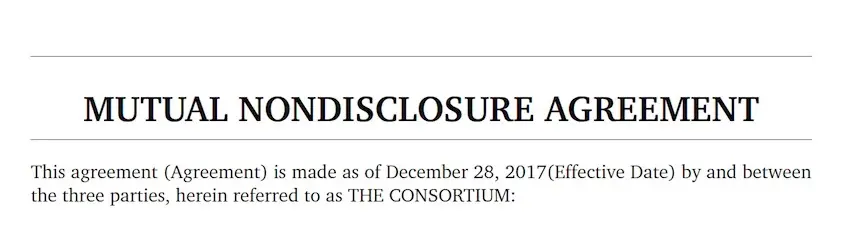
What to include in a Non-Disclosure Agreement plus free editable template
In the world of intellectual property,
protecting sensitive information is just as important as securing formal rights like patents or trademarks. One of
the most common legal tools for this is the non-disclosure agreement (NDA), also referred to as a Confidentiality
Agreement (CDA). These agreements allow individuals or companies to share confidential information while legally
preventing others from disclosing it.
Because NDAs come in many forms and vary from case to case, it's important to understand what key elements an NDA
should contain. On our dedicated page, you'll find an easy-to-follow checklist and a customizable NDA template to
help you navigate these agreements with confidence. Whether you're protecting an algorithm, product concept, or
business strategy, a well-structured NDA is your first line of defense.
Explore More Intellectual Property Topics
Below, you will find additional articles related to the key insights mentioned above, designed to help you navigate
the world of intellectual property and protect your invention.
The potential infringement of Apple on a Masimo patent
The longstanding dispute between Apple and the medical technology company Masimo
over a potential infringement by Apple on a Masimo patent, claiming that the patented technology is being used
in Apple Watches without permission. Why are these companies engaged in such a significant battle involving
their patents? It's expected that these watches, capable of measuring vital functions at home, will play a
crucial role in monitoring one's health without the need for a doctor and automatically transmitting medical
data to, for instance, a local healthcare center or a hospital. This kind of technology is anticipated to be
highly significant in the shift toward an enormous market...
How does copyright work for animals and why can't the selfie monkey claim copyright on its own photo?
Is it possible for a monkey to obtain copyright on a selfie it took itself? Almost everyone who regularly surfs the
internet and social media has seen the above selfie of the monkey and had a good laugh about it. The creature had
grabbed someone's camera, put on its most charming smile, and taken the above photo. Nice story. But, as is often
the case with too good stories, it also went a bit differently in this case, and this monkey business also had a
legal sequel regarding the copyright on the selfie. Twice there have been lawsuits over the copyright of the
monkey's selfie. How does this work?...
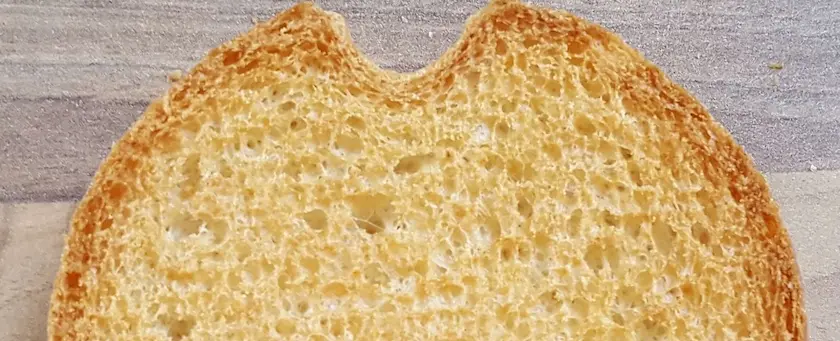
Several times, Theo Tempels, the inventor of the notch in the rusk, has faced legal challenges as companies
questioned the validity of his patent when they wanted to apply the notch in their products. The legal requirement
of inventiveness of the invention described in the patent, in particular, was also called into question. Yet again, the court ruled in favor of the
inventor....
Discover the fascinating story of Jan Sloot, his groundbreaking technology, and the lessons about confidentiality, innovation, and business partnerships.
Bringing a disruptive idea to market, like Jan Sloot's extraordinary invention which is told in this page, involves both
incredible opportunities and significant risks. The Sloot story vividly illustrates the challenges of maintaining
secrecy while pursuing development and partnerships. From navigating confidentiality agreements to securing patents,
there are clear steps every inventor can take to avoid pitfalls and maximize their invention's value...
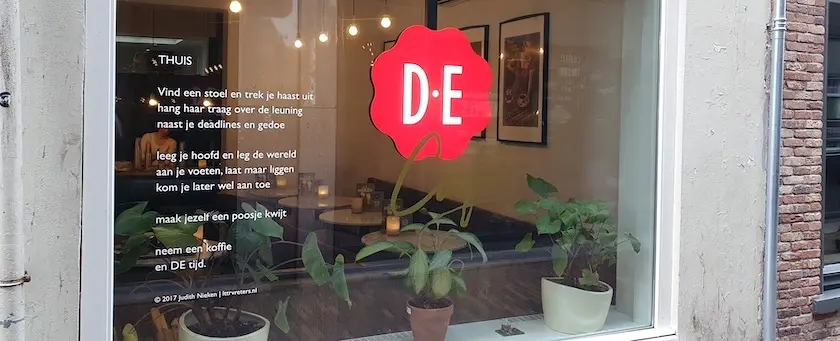
How Douwe Egberts and Philips lost their legal grip on single-serve coffee innovation
What began as a hugely successful collaboration between Philips and Douwe Egberts to revolutionize home coffee brewing
with the Senseo system, ended up in a costly patent dispute. Their attempt to patent the coffee pad design was revoked by the European
Patent Office due to a lack of novelty and inventiveness. This story offers a valuable lesson in intellectual property strategy—even
for major corporations.
Patents are granted only for inventions that are new.
To determine novelty, patent offices examine earlier disclosures
known as prior art. These can include patents, scientific publications,
product documentation, or even public demonstrations.
For inventors, understanding prior art is essential before deciding
whether filing a patent application makes strategic sense.
Read the full guide on
what counts as prior art in patent law.
Prior Art: The Foundation of Patent Examination
A granted patent only has real value if it can be enforced. Patent enforcement is about understanding what
your patent allows you to stop others from doing, but also about recognising the risks involved — including
disputes, negotiation, and the possibility that you may unintentionally infringe on existing patents yourself.
These enforcement and infringement risks play a crucial role in any patent strategy.
This page explains how enforcement works in practice and why these risks should be considered early.
Patent enforcement and infringement risks
What is the meaning of intellectual property? When you have developed an invention, you may consider patenting it.
Patenting an invention belongs legally to the so-called intellectual property law.
On
this page, we will introduce the conceptual framework of intellectual property law (IP). In addition to
patents, this covers Copyright, Design Rights, and Trademark Law, among others.
In other words, it covers rights to creations of the human mind. Patents on inventions are the most well-known, but
it also includes literary works, names, music, images, symbols, and designs for commercial use.
The idea behind intellectual property law is to provide a system and guarantee to reward inventors, authors, and
other creative minds for their efforts.
What is intellectual property?
When someone has written a specific text, others are not allowed, according to
copyright law, to simply copy and use it. This is even considered a legal offense and is regulated by copyright
laws. It's unnecessary to include the copyright symbol to assert copyright protection. Additionally, there's no
obligation to register or formally record the texts to enforce copyright. However, certain conditions must be met for a work to qualify for copyright
protection.
What is copyright?
The Unitary Patent System, which became effective on June 1, 2023, is a European patent
that grants protection for your invention across all EU countries participating in the Unitary Patent System with
just one granted patent. At its launch, this covered 17 countries. This system eliminates the need for separate
patent examinations in each member state because the Unitary Patent automatically provides protection in all participating
EU countries upon grant.
The Unitary Patent System for getting a patent in the EU
A patent provides protection against unauthorized production, use, storage, and sale of a product,
technology, or method by others, without permission from the patent holder. This wrongful act is called
patent infringement and constitutes a violation of
Intellectual Property Rights (IPR). The patent grants the patent holder the right to take legal action
against such infringements.
What is patent infringement?
Intellectual property litigation is the legal process used to resolve disputes over patents, trademarks,
copyrights, or other IP rights.
It covers everything from stopping infringement to challenging the validity of someone else's rights,
and can involve court proceedings or alternative dispute resolution such as arbitration or mediation.
What is IP Litigation?
The abbreviation MTA stands for Material Transfer Agreement. It is a legal contract used in the transfer of research
material between two parties, such as universities or research institutions. There is also a similar document for
the transfer of data (the DTA) or a combination of both (the MDTA). In many cases, the transferred materials fall
under intellectual property rights, such as patents and copyrights. An MTA outlines the conditions under which the
transfer takes place, including the rights and obligations of the parties involved, and it governs any restrictions
on the use or distribution of the materials.
What is a Material Transfer Agreement (MTA)?
Read about the Patent Cooperation Treaty (PCT). This treaty,
signed by more than 150 countries, allows a patent to be registered in
multiple countries through a single application. This temporarily protects the invention in all participating countries.
After registration, the examination process follows,
and if the application is approved, the inventor must choose in which countries the patent should be pursued.
Applying for a Worldwide Patent: The PCT Route
Many founders assume that if technology is already published, it cannot be patented anymore. This real startup case
shows why that assumption can be misleading. While the underlying research was part of the public domain,
the application was still patentable — and someone else moved first.
Read
how a university secured control through patent strategy
and what this teaches about prior art, timing, and ownership in intellectual property.
When a University Patents Your Idea First
For inventors and startup founders, understanding intellectual property is
of paramount importance. The right protection strategy can determine whether an innovation
becomes a valuable asset or an easy copied technology because lack of protection. The guides in this
section explain how different forms of intellectual property work and how
they can support commercialization and investment.
About Siert Bruins
Hello! I'm Siert Bruins, a Dutch entrepreneur and founder of
Life2Ledger B.V.. Trained as a Medical Biologist, I hold a PhD in Clinical Diagnostics from the
University of Groningen and have over two decades of hands-on experience in innovation at the intersection of universities,
hospitals and technology-driven companies.
Throughout my career, I have (co)-founded several life science startups and helped researchers, inventors, and
early-stage founders transform their ideas into prototypes, patents, partnerships, and funded projects. My work spans
medical device development, clinical validation, startup strategy, and technology transfer. I've guided innovations from
the initial sketch to licensing agreements and investment negotiations.
Since 2009, I've run the Dutch version of this site. I launched
Technoventure.eu to provide founders worldwide with
practical, experience-based guidance on inventions, patents, valuation and raising startup capital.
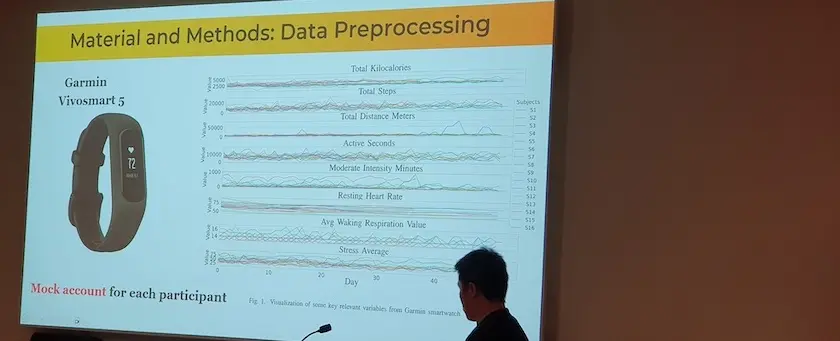
Today, in Life2Ledger, I also focus on blockchain-based data validation for AI in healthcare
— Specifically: how can you be sure that your AI is trained and validated on the correct data, and that this data
truly comes from the patient and the device you think it does?
The content on this site is based on my own experience with real startups — real negotiations, real decisions, and
real outcomes. Yes, I use tools to support the writing process, but the insights, structure, and conclusions are my own.
This is not generic content, but a reflection of what actually happens behind the scenes.
Want to connect? Visit my
LinkedIn
or follow me on
X.
Have questions about your startup strategy or patents? Reach out and I'll share practical insights from real-world experience.
Technoventure.eu was founded in 2012 and is fully written and curated by me, Siert Bruins, PhD.
Every article is based on my own professional experience. I publish at a natural pace — aiming for around one
high-quality page per week — providing guidance on patents, startup capital, valuation, and commercialization. Depth
and accuracy matter more than mass production.
My goal is to offer reliable, experience-based info for inventors and first-time founders. I hope to help people
turn new ideas into real-world value — whether through selling an idea, building it just far enough to sell, or
launching a startup. For most independent inventors, I believe the smartest path is often to build just enough — then sell.